
2025 Serengeti Migration Guide: What to Expect This January

Serengeti Migration Guide: January 2025
Picture wildebeest as far as you can see, mixed with zebras and gazelles, all moving together across the plains. The Serengeti Migration is one of the great wildlife events on the planet. January is a special month in the cycle, because it’s when calving season gets going on the green southern plains, and you can be right there to see it.
If 2025 is your year for the Serengeti, this guide will help you plan and get the most out of your trip.
What Is the Serengeti Migration?
- A huge natural event: The Serengeti Migration involves more than 1.5 million wildebeest, 200,000 zebras and many gazelles moving through the Serengeti-Mara ecosystem. They cover roughly 3,000 kilometers a year, always looking for fresh grass and water.
- A yearly cycle: The migration never really stops. It moves through a few main stages: calving, moving north, river crossings and the return south. January falls in the calving stage, when the herds settle in the southern Serengeti and the young are born.
Why Visit the Serengeti in January?
- Where the herds are: In January the migration gathers on the Ndutu and Kusini Plains, where short grass grows well after the seasonal rains. The green plains give the herds plenty to eat and make a lovely setting for your safari photos.
- Calving season starts: January is when calving season begins. Close to 500,000 calves are born within a few weeks. All those young animals draw in predators, so the wildlife viewing can be very exciting.
Where to See the Migration in January
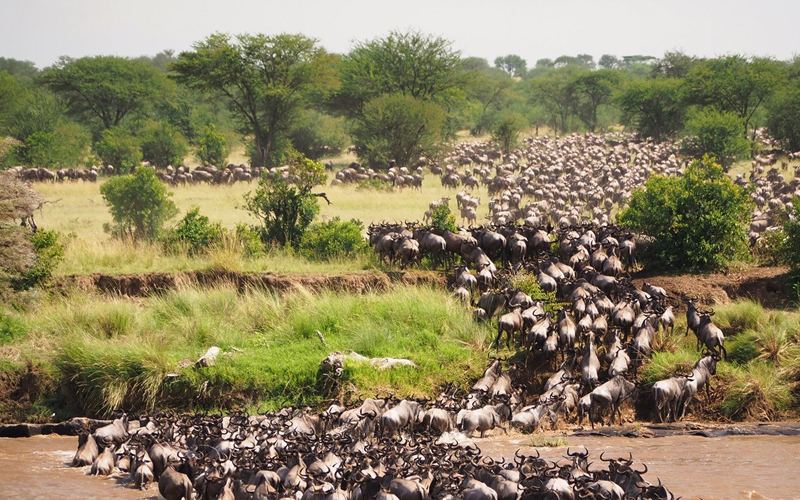
- Southern Serengeti, the Ndutu and Kusini Plains: This is the center of the migration in January. The plains are flat, so animals are easy to spot, and with so many herds in one area it’s a top place to be.
- The Ngorongoro Conservation Area: The Ndutu area is part of the Ngorongoro Conservation Area and mixes open plains with woodland. It’s an important calving ground and a great place for close wildlife sightings.
Wildlife Beyond the Migration
- Predators at work: With so many newborns on the plains, lions, cheetahs, hyenas and leopards are very active. Seeing a hunt is exciting, and it also shows you how tough life on the plains can be.
- Birdlife: January also brings migratory birds to the Serengeti. You might see flamingos at nearby lakes and birds of prey circling overhead, so bring your binoculars.
Activities to Enjoy During Your Visit
- Game drives: Game drives are the core of any Serengeti safari. Experienced guides help you follow the herds and find predators that are hard to spot.
- Guided nature walks: For a closer look, a guided walk lets you take in the sights, sounds and smells of the Serengeti on foot.
- Hot air balloon safaris: Floating over the plains at sunrise gives you a completely different view of the migration. Many travelers have it high on their wish list.
Where to Stay During the January Migration
- Luxury camps and lodges: Places like Ndutu Safari Lodge and Kusini Camp offer comfortable rooms close to the migration areas.
- Mobile tented camps: Mobile camps move with the herds, so you stay close to the action. They give you a good mix of comfort and a real bush feel.
What to Pack for a Serengeti Safari
- Clothing and basics: Light clothes in neutral colors, a wide-brimmed hat and a good pair of binoculars are must-haves.
- Photography gear: A good camera with a zoom lens will help you capture the moments you’ll want to remember. Bring extra batteries and memory cards too!
Tips for Planning Your 2025 Serengeti Migration Trip
- Book early: January is a busy month in the Serengeti. Book your lodges and safari well ahead so you get the places you want.
- Choose a reliable safari operator: Look for an operator with good reviews and experience with migration safaris. Their know-how can make a big difference to your trip.
Environmental and Ethical Considerations
- Support eco-friendly tourism: Choose lodges and operators that care about sustainability, so your trip leaves as small a footprint as possible.
- Respect wildlife and local communities: Follow your guide’s instructions so you don’t disturb the animals, and be respectful when you meet local people. It makes for a better exchange on both sides.
Seeing the Serengeti Migration in January is something special. Between the calving season and the action between predators and prey, the Serengeti gives you moments you’ll talk about for years. Prepare well, travel responsibly and enjoy one of Tanzania’s best-known wildlife events.
Serengeti Migration FAQs
- What’s the best way to see the migration in January?
Head to the Ndutu and Kusini Plains. You can choose between game drives, guided walks and hot air balloon safaris. - How many wildebeest migrate each year?
More than 1.5 million wildebeest take part in the migration. - Do I need a guide?
Yes. A guide brings expert knowledge, makes your trip much richer and keeps you safe. - Is January good for a family safari?
Yes! Calving season is fascinating for kids and adults alike. - Can I combine the Serengeti with other places in Tanzania?
Yes. You could add Ngorongoro Crater, Tarangire National Park or the beaches of Zanzibar to your trip.


