

6 Days Umbwe Route + 2 Nights in Hotel
From $1,850

Kilimanjaro route
The Umbwe Route isn't for everyone, and that's exactly why serious adventurers like it. It's known for a steep, fast and direct climb with little time to acclimatize, so it's usually recommended only for experienced trekkers or climbers who are already used to high altitude.
If you're up for the challenge, you get a tough, remote and exciting climb that few people can say they've done. If rough ground, thin air and a path that goes more up than along sound good to you, read on.
The Umbwe Route starts on the southern side of Mount Kilimanjaro and quickly heads into thick rainforest, up steep ridges and over rocky paths. Most routes let you climb slow and steady, but Umbwe gains height fast from the start. There's little flat ground, and the days are long and tiring.
Because the climb is so steep, it's one of the least used routes, but also one of the most beautiful. The trail is remote, scenic and quiet, and it feels much wilder than the busier paths.
But because of the steep climb and short acclimatization time, the summit success rate is lower than on longer routes like Lemosho or the Northern Circuit, unless climbers are very fit and/or already acclimatized.
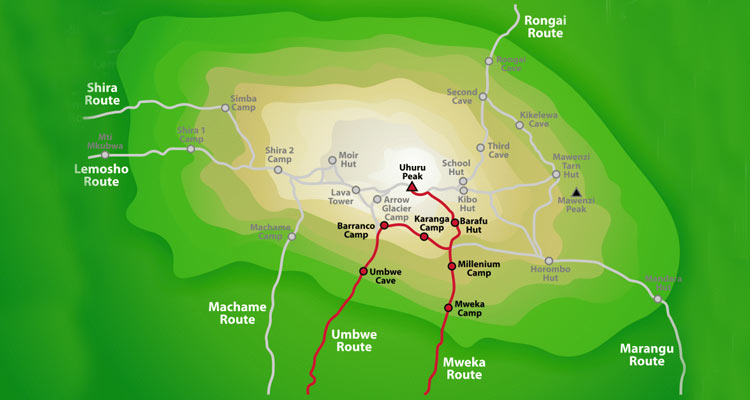
Itineraries
This is a short but hard trek, so your gear has to work well. Here's what you need:
Clothing:
Gear:
Acclimatization is the biggest challenge on the Umbwe Route. Because you climb so fast, your body may not have enough time to adjust. Here's how to prepare:


