
How Far in Advance Should You Book a Tanzania Safari? A Month-by-Month Planning Guide

Knowing when to book Tanzania safari trips can make the difference between your first-choice lodge and whatever happens to be left. Tanzania is a year-round destination, but demand is not spread evenly: some months fill up long in advance, while others are quiet and flexible. This guide explains the seasons, the Great Migration and the Ndutu calving season, how school holidays affect demand, and how far ahead to plan for budget, mid-range and luxury safaris. We also give a simple booking timeline for 12, 9, 6 and 3 months ahead, and a month-by-month guide.
Why Knowing When to Book Tanzania Safari Lodges Matters
Safari accommodation is limited. Lodges and camps inside or near the parks have a fixed number of rooms and tents, and the best-located ones are the first to be taken in popular periods. Vehicles, guides and, where used, domestic flight seats are limited too. Booking in good time gives you more choice of dates, lodges and routes, and more time to arrange flights, insurance and vaccinations.
It is worth being clear about what booking early does and does not do. It improves your choice and gives you time to plan. It does not guarantee a lower price, and it cannot guarantee any wildlife sighting, because animals move with the rains and the seasons. Accommodation availability also changes daily, so it should always be checked at the time you book.
Tanzania Safari Seasons: High, Shoulder and Low
High season: June to October, plus the holiday periods
The dry season from June to October is the most popular time, with sunny days, easy game viewing and animals gathering near water. It is busiest in July and August. Christmas and New Year is another busy period. Prices are at their highest and lodges fill early. Our own guidance is to book lodges and guides for June to September 6 to 12 months ahead.
Shoulder season: around March and November
These transition months offer a good balance of reasonable weather, fewer visitors and more flexibility on dates. The calving season in the southern Serengeti and Ndutu also runs through the early months of the year, which can be popular even though it falls outside the dry season.
Low season: April and May
The long rains bring green landscapes, fewer visitors and lower prices. Roads can be muddy, so a 4WD vehicle matters, and some remote camps close. Availability is usually easier, so planning can be done with a shorter lead time. See our guide to the best time to go on safari for more detail.
When to Book Tanzania Safari Trips for the Great Migration in the Northern Serengeti
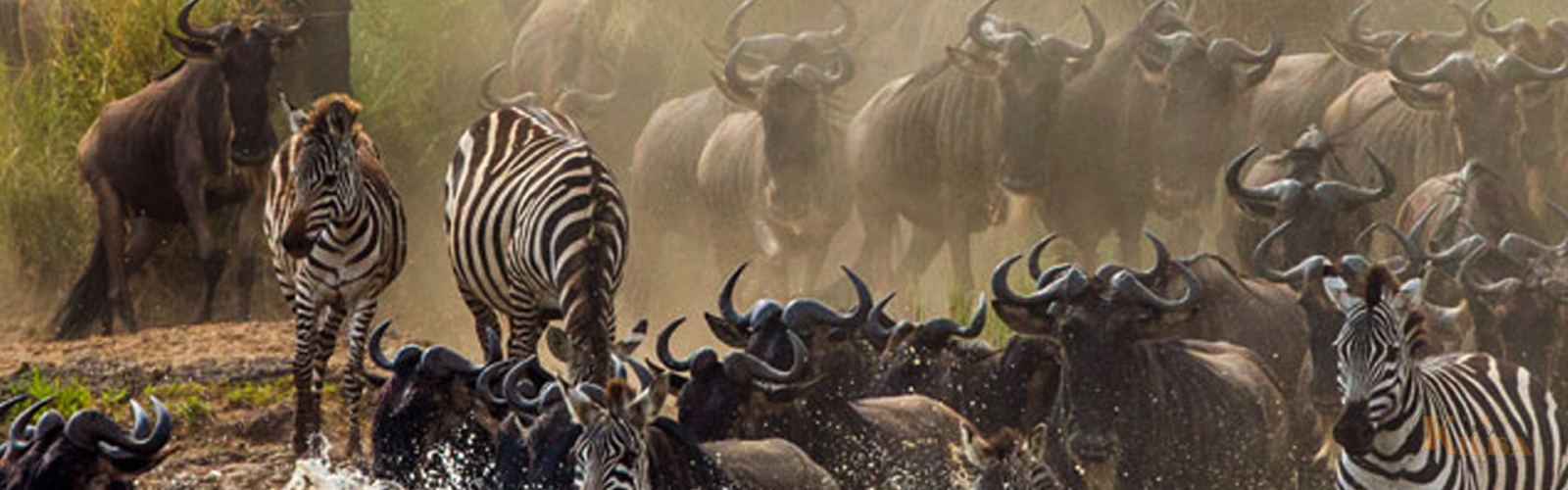
The Great Wildebeest Migration is a year-round, circular movement of well over a million animals that follows the rains, so where the herds are depends on the year. As a rough guide:
- June to July: the herds move north through the Western Corridor and the Grumeti River area
- August to October: the herds are typically in the northern Serengeti, with Mara River crossings. In a dry year the first herds can reach the river by early July; in a wet year they may arrive around mid-August.
- November to December: the herds head back toward the south
Because the northern Serengeti has a limited number of camps and falls in the busiest months, this is one of the areas where early planning matters most. Plan your Migration safari at least 9 to 12 months ahead where possible, choose dates with some flexibility, and talk to us about the timing, since river crossings cannot be predicted to the day. See our Serengeti wildebeest migration safari page, including the 7-day Mara River crossing safari and the 6-day northern Serengeti migration safari.

Planning Ahead for the January to March Calving Season in Ndutu
The calving season usually falls between late January and early March in the southern Serengeti and the Ndutu area, though the exact timing depends on the rains. Hundreds of thousands of calves are born in a few weeks, and predators are close by, which makes it popular with photographers. Accommodation in the Ndutu area is limited and demand for the calving weeks is strong, so we suggest planning 6 to 9 months ahead. Keep your dates flexible by a few days if you can, since the peak shifts from year to year. See our calving season migration safari and the 4-day and 5-day calving season safaris.
When to Book Tanzania Safari Accommodation for July, August and September
These are the busiest months for safaris. The weather is dry and cool, the wildlife is easy to see, and the northern Serengeti Migration season overlaps with the summer holidays in Europe and North America. As a result, lodges and tented camps in the most popular areas, particularly the Serengeti and the Ngorongoro Crater rim, can sell out. Our own guidance is to secure accommodation 6 to 12 months ahead for these months. If your preferred lodge is full, we can suggest alternatives in the same area, but the choice narrows the closer you get.
How School Holidays and Summer Holidays Affect Demand
Safari demand follows travelers’ calendars as much as the wildlife. Expect higher demand during:
- European and North American summer holidays, mostly July and August
- Christmas and New Year, when many families travel
- Easter and mid-term school breaks, which vary from year to year and country to country
If you are traveling with children, check your school calendar first and plan around it. One guest who traveled with us over the Christmas period described how every detail had been planned ahead, which is the point of booking early for holiday travel.
When to Book Tanzania Safari Budget, Mid-Range and Luxury Accommodation
These are practical guidelines, not rules. Availability changes, so please check at the time of booking.
- Luxury lodges and camps: these have the fewest rooms and the most competitive locations. For peak months, the Migration and calving season, aim for 9 to 12 months or more ahead.
- Mid-range lodges and tented camps: for June to September and the holiday periods, aim for 6 to 9 months ahead. Outside peak months, 3 to 6 months is often comfortable.
- Budget camping safaris: these are usually the most flexible, but peak months still fill up. Aim for 3 to 6 months ahead for busy periods, and a shorter lead time in the low season.
Compare our budget camping safaris, mid-range safaris and luxury safaris to see what each includes.
Domestic Flights and Popular Lodges: Secure Them Early
If your trip uses a domestic flight, such as a fly-in to a Serengeti airstrip or a flight to Zanzibar after your safari, seats can sell out in peak months, and flight schedules can limit which dates work. Book your international flights and any domestic flights around the same time as your safari, and check baggage rules, because small aircraft usually require soft bags. Popular lodges and camps should be confirmed before you buy non-refundable flights, so your dates line up. Most of our safaris travel by road from Arusha in a 4x4 safari vehicle, which keeps this simpler.
Are Last-Minute Safari Bookings Possible?
Sometimes, yes. Outside the peak months, a safari can often be arranged at short notice, particularly a camping or mid-range safari with flexible dates. In the busiest months, last-minute options are limited, and you may need to accept different lodges, a different route or different dates. If you are booking close to departure, contact us early, be flexible and have your passport, visa and insurance ready. Last-minute availability cannot be promised, so we always check it at the time of your enquiry.
How Flexible Travel Dates Can Help
Flexible dates are one of the most useful planning tools. Shifting your trip by a few days, or traveling in a shoulder month rather than a peak week, can open up lodges that are full on your first-choice dates. If you can be flexible, tell us your range, for example “any week in the second half of June”, and we can look for the best available combination. For full control of your route and timing, you can also design your own tour.
Month-by-Month Guide: When to Book Tanzania Safari Trips
Here is a month-by-month summary, with suggested lead times for planning. These are guidelines, not guarantees.
- January and February: calving season in the south of the Serengeti and Ndutu. Popular; plan 6 to 9 months ahead.
- March: the end of calving and a shoulder month, with rain increasing. Plan 4 to 6 months ahead.
- April and May: the long rains and low season, with green landscapes and fewer visitors. Often possible with 2 to 4 months of notice.
- June: the start of the dry season, with herds moving toward the Western Corridor. Plan 6 to 9 months ahead.
- July, August and September: peak season and the northern Serengeti Migration. Plan 9 to 12 months ahead, especially for luxury and Mara River crossings.
- October: still dry, with Migration activity in the north and slightly easing demand. Plan 6 to 9 months ahead.
- November: the short rains and a quieter month as the herds head south. Plan 3 to 5 months ahead.
- December: Christmas and New Year demand rises quickly. Plan 6 to 9 months ahead for the holiday weeks.
The Booking Process, Deposits and Balance Payments
Booking a safari with us is straightforward:
- Tell us your dates, the number of travelers and your budget through our contact page, by email or on WhatsApp
- We suggest an itinerary and send a written quotation showing what is included and excluded
- We check availability for your dates, since accommodation can change before you confirm
- You confirm the safari and pay the deposit
- You pay the balance before travel, on the date set in your confirmation
- You receive your pre-trip information, and your guide meets you on arrival
Whatever the terms, ask for them in writing before you pay. Our guide on how to choose a Tanzania safari tour operator covers what to ask, and our safari package inclusions guide explains what a quotation should show.
Suggested Timeline for When to Book Tanzania Safari Trips: 12, 9, 6 and 3 Months Ahead
12 months ahead
- Choose your season and priorities: Migration, calving, dry-season wildlife or quiet months
- Ask for quotations and availability, especially for luxury camps, the northern Serengeti and school-holiday dates
- Pay the deposit when you are ready, so your dates are held under the terms in your confirmation
9 months ahead
- Finalize your route and accommodation style
- Book international flights and any domestic flights
- Check passport validity, which should cover your whole trip
6 months ahead
- Confirm any remaining mid-range and camping bookings for peak months
- Buy travel insurance covering medical care and evacuation; see our travel insurance guide
- Check vaccination needs; see immunization and medical kits
3 months ahead
- Arrange your visa and pay any balance due
- Prepare your packing list; see what to take
- If you are only now planning, contact us right away and be flexible: availability may be limited in peak months, but options often exist in other periods
Park information is available from Tanzania National Parks (TANAPA), and you can compare itineraries across our tours and safaris.
Plan Your Safari with Kilisa Tours & Safaris
Kilisa Tours & Safaris is a locally owned Tanzanian operator based in Moshi, and our team can tell you what availability looks like for your dates. Share your plans and we will help you decide when to book Tanzania safari accommodation and which season suits you best. We will always check availability at the time of your enquiry, and confirm it in writing.
Contact Kilisa Tours & Safaris today to start planning. For more advice, visit our blog.


