
Kilimanjaro vs. Mount Meru: Which Trek is Best for You?

Kilimanjaro vs Mount Meru: Trekking in 2025
If you’re planning a trek in Tanzania, two mountains will probably catch your eye: Mount Kilimanjaro and Mount Meru. Both are great climbs, but they’re very different in difficulty, scenery and overall feel.
So how do you pick the right one? Let’s go through it together.
Mount Kilimanjaro: The Roof of Africa
Location and why it matters
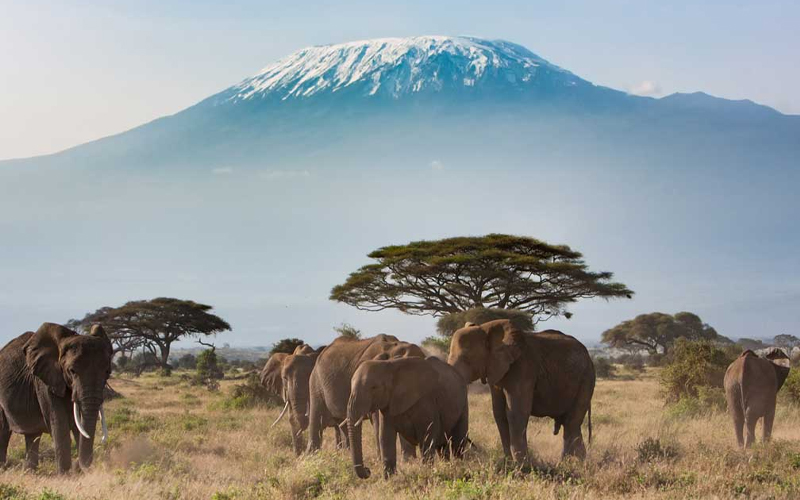
Mount Kilimanjaro stands 5,895 meters (19,341 feet) high. It’s Africa’s highest mountain and one of the best-known treks in the world. This free-standing volcano sits in northern Tanzania, close to the border with Kenya, and thousands of trekkers climb it every year. The mountain is protected as Kilimanjaro National Park.
Main routes and how hard they are
Kilimanjaro has several routes, each with its own level of difficulty:
- Marangu Route (5–6 days) – The “Coca-Cola” route. Easier, but with lower success rates.
- Machame Route (6–7 days) – One of the most popular. Scenic and challenging.
- Lemosho Route (7–8 days) – A gradual climb, a high success rate and great views.
- Rongai Route (6–7 days) – Quieter, and approaches the mountain from the north.
- Northern Circuit (8–9 days) – The longest route, and the best one for acclimatization.
The biggest challenge? Altitude sickness! The height makes Kilimanjaro a tough trek. You need good fitness and enough time to acclimatize.
Mount Meru: Tanzania’s Quieter Peak
Location and why it matters
Mount Meru stands 4,566 meters (14,980 feet) high. It’s Tanzania’s second-highest peak and sits inside Arusha National Park. People often overlook it because of Kilimanjaro, but this dormant volcano gives you a quieter trek with more wildlife.
The route and what to expect
Unlike Kilimanjaro, Mount Meru has just one main route: the Momella Route, which takes 3–4 days. You start in green rainforest and climb slowly through moorland before reaching the rocky summit, Socialist Peak.
Something special about Mount Meru? You trek with an armed ranger, because there’s a lot of wildlife around, including elephants, buffalo and leopards!
Comparing Kilimanjaro and Mount Meru
Difficulty
- Kilimanjaro: Harder, because it’s higher and takes longer.
- Mount Meru: Easier, but still hard work, with some steep climbs.
Altitude and acclimatization
- Kilimanjaro: The high altitude means you need to acclimatize properly to avoid getting sick.
- Mount Meru: Lower, which makes it a great warm-up trek before Kilimanjaro.
Scenery and landscape
- Kilimanjaro: Glaciers near the top, alpine desert and wide-open views.
- Mount Meru: Thick forest, steep cliffs and savanna full of animals.
Wildlife
- Kilimanjaro: Not much wildlife; most animals stay below the trekking zone.
- Mount Meru: Lots of wildlife, with a chance to see elephants, giraffes and monkeys.
Crowds and how the trek feels
- Kilimanjaro: Can be very busy, especially on the popular routes.
- Mount Meru: Fewer trekkers, so it feels calmer.
Time and cost
- Kilimanjaro: 5–9 days; prices range from $1,500 to $5,000.
- Mount Meru: 3–4 days; prices around $600 to $1,500.
Who Should Choose Mount Kilimanjaro?
- Experienced trekkers looking for a bucket-list challenge.
- Anyone who wants to stand on Africa’s highest peak.
- Hikers with good fitness and enough time to acclimatize.
Who Should Choose Mount Meru?
- Beginners who want a shorter trek that still feels rewarding.
- Wildlife lovers who enjoy spotting animals on the way.
- Trekkers who want to acclimatize before trying Kilimanjaro.
Best Time to Trek Kilimanjaro and Mount Meru
- Best months: January–March and June–October (the dry seasons).
- Hardest months: April–May and November (the rainy seasons).
Essential Gear for Both Treks
- Clothing: Layers that are warm and waterproof.
- Footwear: Sturdy hiking boots with good grip.
- Extras: A headlamp, trekking poles and a way to carry water.
Training and Preparation
- Build up your cardio fitness with hiking, running and cycling.
- Do strength training for your legs and core.
- Hike at higher altitudes if you can, to get used to lower oxygen levels.
Combining Both Treks
Many trekkers climb Mount Meru first to acclimatize before Kilimanjaro. This raises their success rates and lowers the risk of altitude sickness.
Common Myths and Misconceptions
- “Mount Meru is just a smaller Kilimanjaro.” – Not true! It has its own character, with more wildlife and steeper sections.
- “Kilimanjaro is only for expert climbers.” – Not at all! It’s tough but non-technical, so anyone can try it with the right preparation.
So which trek suits you? If you want the big challenge, go for Kilimanjaro. If you’d like a shorter trek with lots of wildlife, Mount Meru is a great choice. Either way, you’ll see some of Tanzania’s finest wild country.
Kilimanjaro vs Mount Meru FAQs
- Which trek is harder, Kilimanjaro or Mount Meru?
Kilimanjaro is harder because it’s higher and longer. - Can I climb both mountains?
Yes! Many trekkers climb Meru first to acclimatize. - Do I need technical skills for Kilimanjaro?
No, but you do need good fitness and stamina. - Is Mount Meru worth it?
Yes! You get great views, wildlife and fewer people. - What’s the best route on Kilimanjaro?
The Lemosho and Machame routes are among the most scenic and have good success rates.


