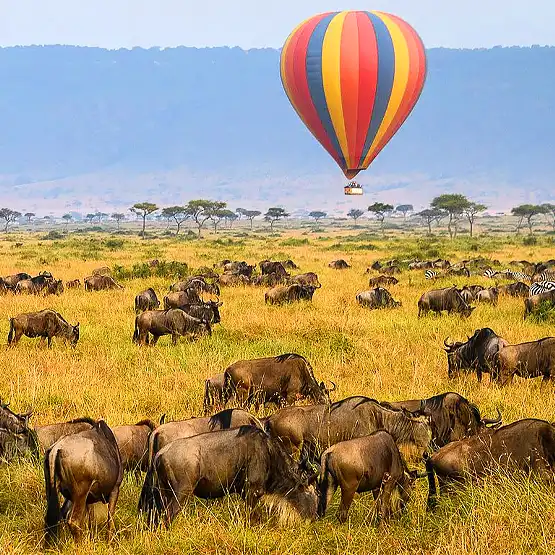
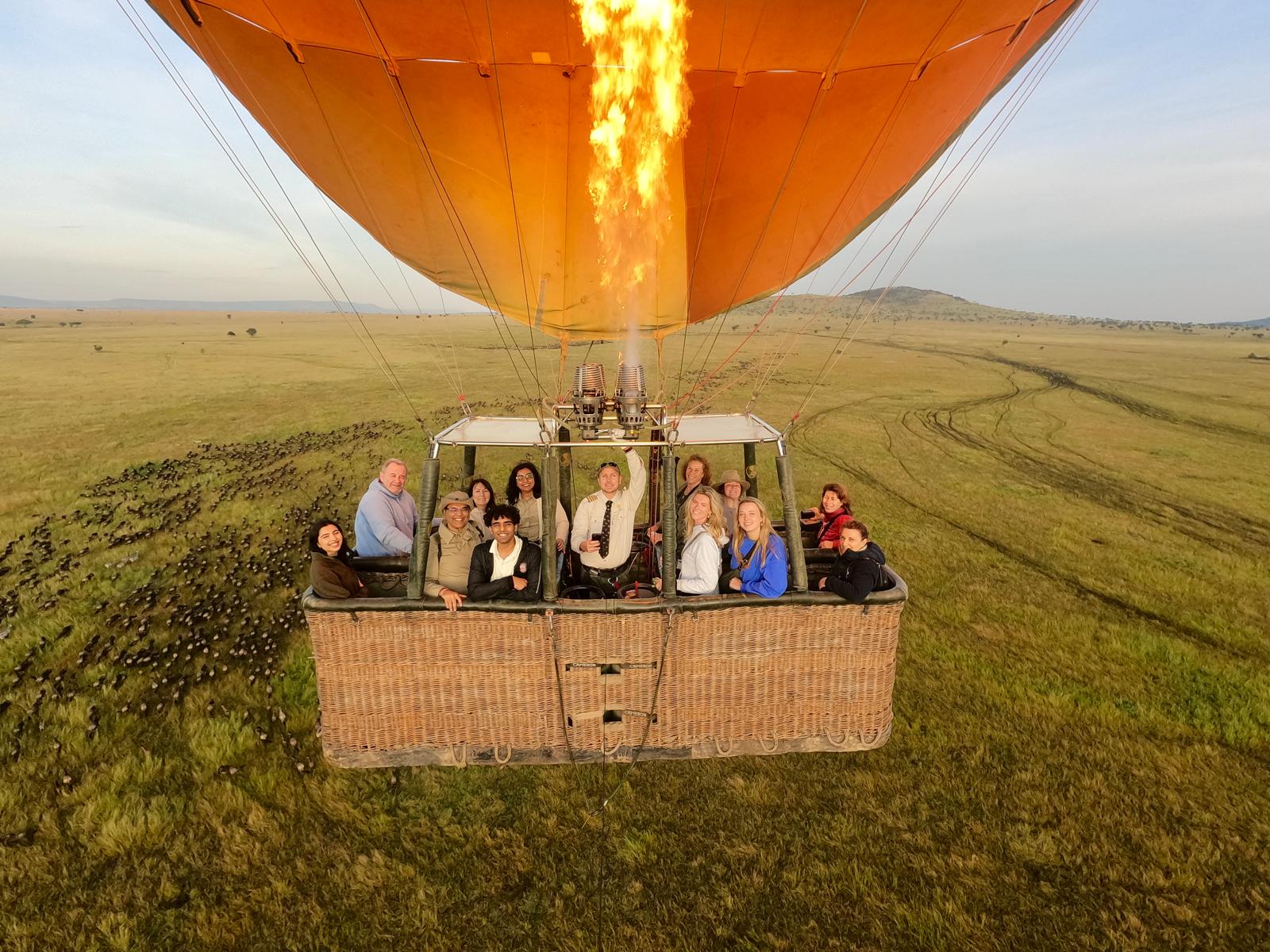
 Where is the migration right now?” It’s the question every safari planner asks us first, and it’s the right one to ask. The Great Migration isn’t a single event you catch on one lucky day — it’s a year-round, circular journey of over 1.5 million wildebeest, alongside hundreds of thousands of zebra and gazelle, constantly on the move across the Serengeti-Mara ecosystem in search of fresh grass and water.
This Great Migration Serengeti guide breaks the journey down month by month, so you can time your Tanzania safari around the moment that matters most to you — whether that’s the chaos of a Mara River crossing, the tenderness of calving season, or the quiet drama of life on the open plains.
At Kilisa Tours and Safari, we track the herds closely and build our itineraries around where the migration actually is, not just where it’s “supposed” to be. Let’s walk through the year.
Understanding the Migration’s Circular Route
Before diving into the calendar, it helps to understand the big picture. The herds move in a roughly clockwise loop through the Serengeti-Mara ecosystem, driven almost entirely by rainfall and the search for fresh grazing. They begin in the short-grass plains of the southern Serengeti and Ngorongoro Conservation Area, push north through the central and western Serengeti, cross into Kenya’s Maasai Mara around the middle of the year, then loop back south as the short rains return. Because rainfall patterns shift slightly every year, exact dates can vary — but the overall pattern is remarkably consistent.
The Great Migration: Month by Month
| Month | Approximate Location | What’s Happening |
|---|---|---|
| January | Ndutu & Southern Serengeti / Ngorongoro Conservation Area | Herds gather on the short-grass plains ahead of calving season |
| February | Ndutu, Salei & Kusini Plains | Peak calving season — up to 8,000 calves born per day |
| March | Southern Serengeti | Herds remain on the plains as calves strengthen |
| April | South-Central Serengeti, Moru Kopjes | Herds begin moving northwest as the long rains set in |
| May | Western Serengeti / Grumeti area | Large columns form, heading toward the Grumeti River |
| June | Grumeti Reserve & Western Corridor | Dramatic Grumeti River crossings, with crocodiles waiting |
| July | Northern Serengeti | Herds approach the Mara River; early crossings may begin |
| August | Northern Serengeti / Maasai Mara border | Peak Mara River crossing season — the most iconic migration scenes |
| September | Northern Serengeti & Maasai Mara | Herds split, with many crossing back and forth across the Mara River |
| October | Lobo Area & Eastern Serengeti | Herds begin moving south again as rains shift |
| November | Eastern & Southern Serengeti | Herds continue south, following the first short rains |
| December | Southern Serengeti / Ndutu | Herds arrive back on the plains, completing the circle |
Note: these are general patterns based on typical rainfall. Because the migration follows the rains rather than a fixed calendar, timing can shift by a few weeks in either direction from year to year.
The Two Moments Worth Planning Around
Calving Season — Late January to March
If you want to see new life on the plains, this is your window. Hundreds of thousands of wildebeest calves are born in just a few short weeks, mostly around the Ndutu region. It’s also one of the best times to see predator action, as lions, cheetahs, and hyenas take full advantage of the vulnerable young calves. The southern plains stay relatively uncrowded compared to peak crossing season, making this a favorite for photographers and repeat visitors.
Explore our calving season itineraries:
- 4-Day Calving Season Migration Safari
- 5-Day Great Wildebeest Migration Safari: Calving Season
- Calving Season Migration Safari
River Crossings — July to September
This is the migration most people picture: thousands of wildebeest plunging into the Mara River, crocodiles waiting below, chaos and instinct colliding in front of your camera lens. Crossings are never guaranteed on a specific day, since the herds’ movements depend on the animals themselves as much as the rains, but late July through September in the northern Serengeti gives you the strongest odds of witnessing one.
Explore our river crossing and northern migration itineraries:
- 7-Day Wildebeest Mara River Crossing Safari
- 6-Day Great Tanzania Northern Serengeti Migration
- 5-Day Tanzania Safari Migration
- Serengeti Wildebeest Migration Safari
So, When Should You Go?
The honest answer: there’s no single “best” month — only the best month for what you want to see. If you’re drawn to new life and a quieter, more intimate safari, plan for calving season. If you want the high-adrenaline drama of a river crossing, plan for late July through September. If you simply want excellent wildlife viewing without chasing one specific event, the migration ecosystem rewards visitors nearly every month of the year, and parks like Serengeti National Park and Ngorongoro Conservation Area stay spectacular year-round regardless of where the main herds happen to be.
Our best time to go on safari guide can help you weigh up seasonal weather alongside migration timing for your specific travel dates.
Migration Safari Packages to Consider
Beyond our dedicated migration itineraries above, many of our standard Serengeti safaris naturally fall within strong migration-viewing windows depending on when you travel. A few popular options:
- 3-Day Mid-Range Safari: Serengeti
- 4-Day Mid-Range Safari: Serengeti
- 3-Day Luxury Safari: Serengeti
- 4-Day Luxury Safari: Serengeti & Ngorongoro
- Full Luxury Safari Collection
- Full Mid-Range Safari Collection
- Budget Camping Safari Collection
Prefer something built entirely around your dates and the migration’s expected position? Our tailor-made tours let us design a custom itinerary that puts you in the right place at the right time.
Tips for Planning a Migration Safari
- Book early. Camps near the action — especially during peak crossing season — fill up far in advance, often 12 months or more ahead of travel.
- Give yourself time. A rushed one-night stop rarely delivers the same payoff as two or three nights in the right region, since the herds move constantly and patience pays off.
- Stay flexible on dates. Because the migration follows rainfall rather than a fixed schedule, a little flexibility around your travel window improves your chances significantly.
- Trust experienced guides. Our professional driver-guides track herd movements closely and know how to position you for the best possible sightings.
- Pack appropriately. Check our what to take guide and safari equipment guide before you travel.
Let Us Help You Time It Right
The Great Migration is one of the most extraordinary wildlife spectacles on Earth, but timing your visit well makes all the difference between a good safari and an unforgettable one. At Kilisa Tours and Safari, we follow the herds closely throughout the year and build itineraries designed to put you exactly where the action is unfolding.
Whether you’re drawn to the tenderness of calving season or the raw drama of a river crossing, our team will help you choose the right month, the right region, and the right itinerary for the migration experience you’re hoping for.
Contact us today to start planning your Great Migration safari in Tanzania.